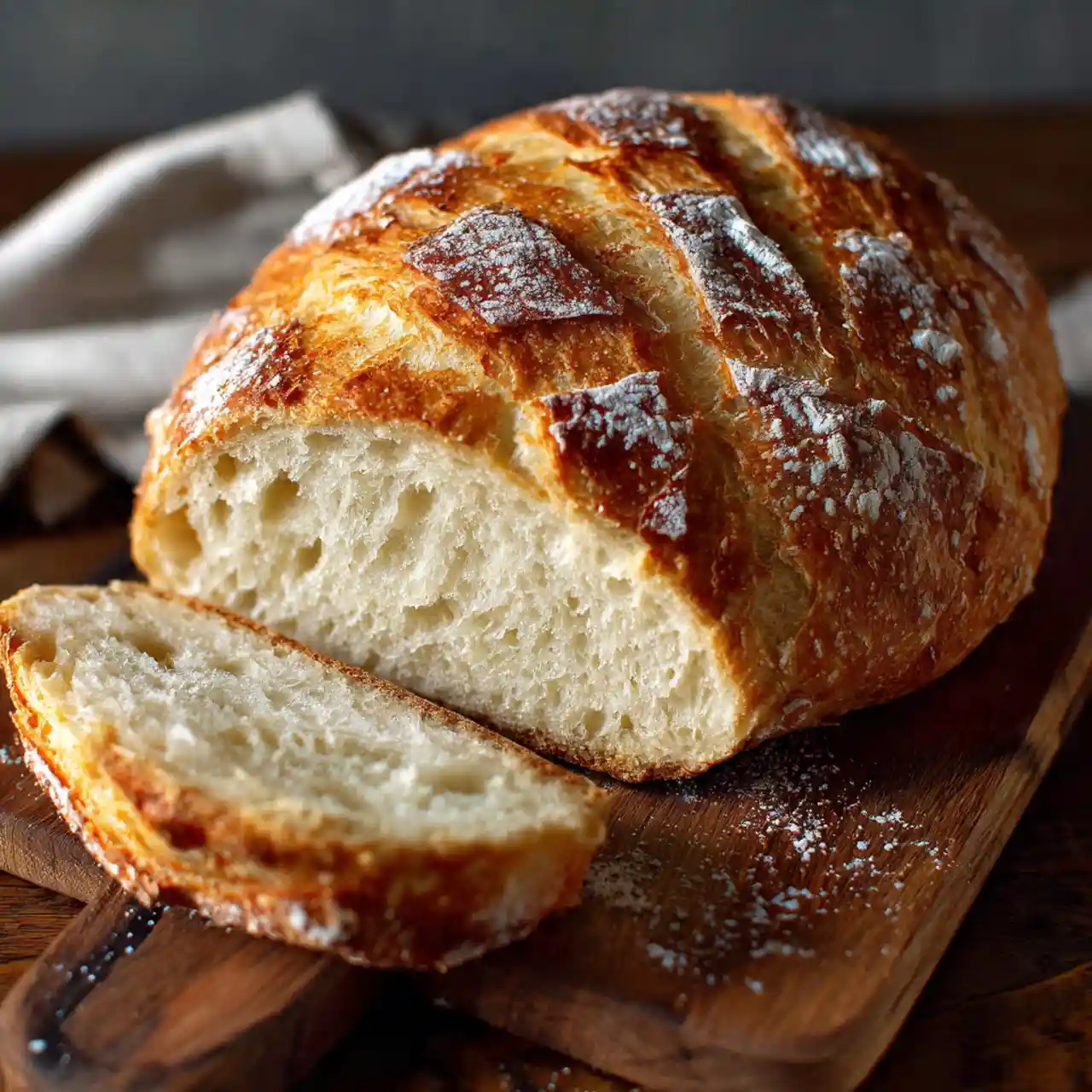
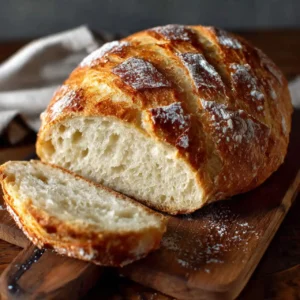
This crusty golden sourdough bread has a crisp shell and a soft, chewy middle. It uses only four ingredients, but technique matters. Many readers look for simple guidance without jargon. That’s what this guide offers. I’ll explain how the dough works, how to shape it, how long to ferment it, and how to bake it in a Dutch oven or on a baking steel. And if you need the ingredient list or a shorter version, you can also find a quick recipe card on homeandfiesta.
Sourdough Sandwich or Toasting Bread
What Is Crusty Golden Sourdough Bread?
Sourdough bread is dough made with wild yeast and bacteria. These live in your starter. They ferment the flour and water, help the dough rise, and build flavor.
This recipe makes a round loaf with a blistered crust and a chewy inside. You don’t need special skills. You only need an active starter, warm water, bread flour, and salt. The method relies on rest periods, gentle stretching, and a long, cold proof.
The bread rises slowly. This slow rise builds a deeper taste and a better structure. You can bake the loaf in a Dutch oven for strong steam or on a baking steel for a darker base.
Crusty Golden Sourdough Bread
With a soft, chewy center
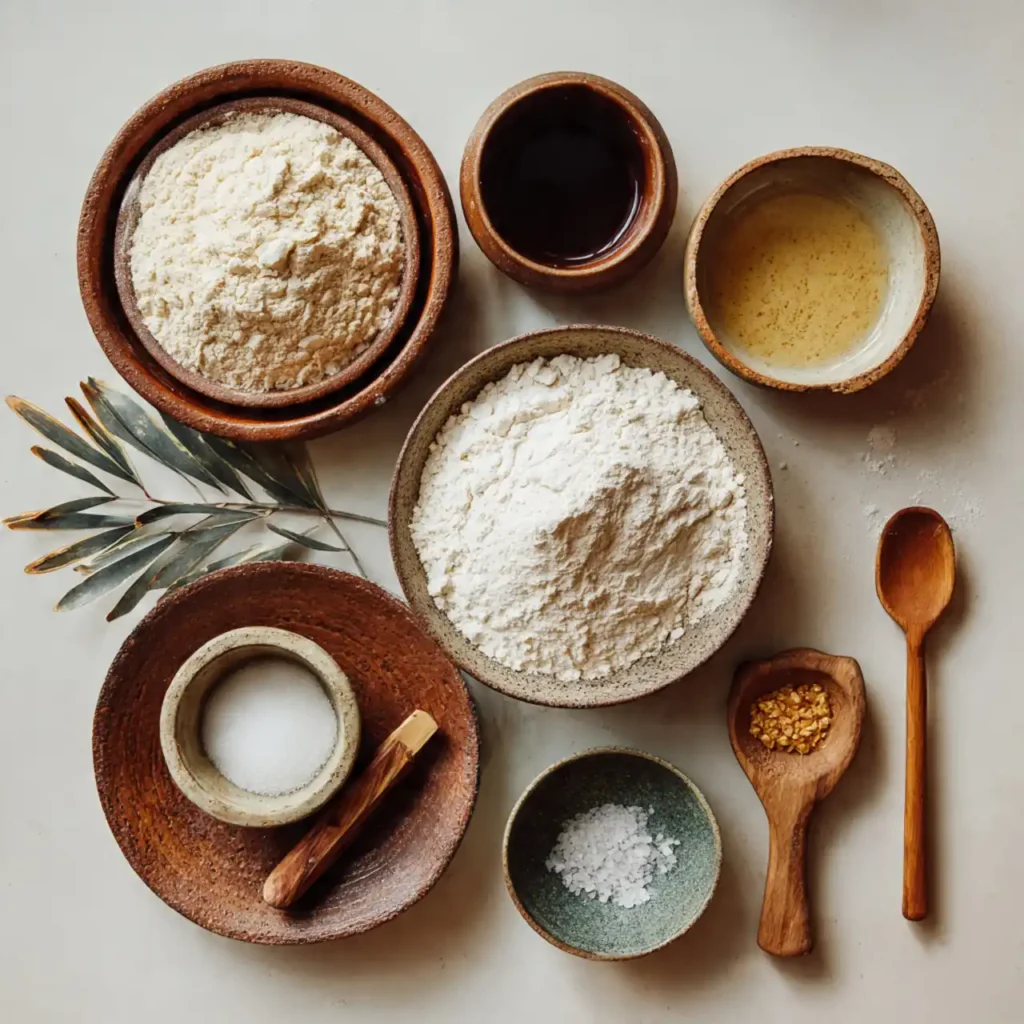
Ingredients
- 100 g active sourdough starter (about 1/2 cup)
- 375 g warm water (about 1 1/2 cups + 1 tbsp)
- 500 g bread flour (about 4 cups)
- 10 g salt (about 1 1/2 tsp)
Optional:
- Replace 50–100 g flour with whole wheat.
- Use rice flour to dust your proofing basket.
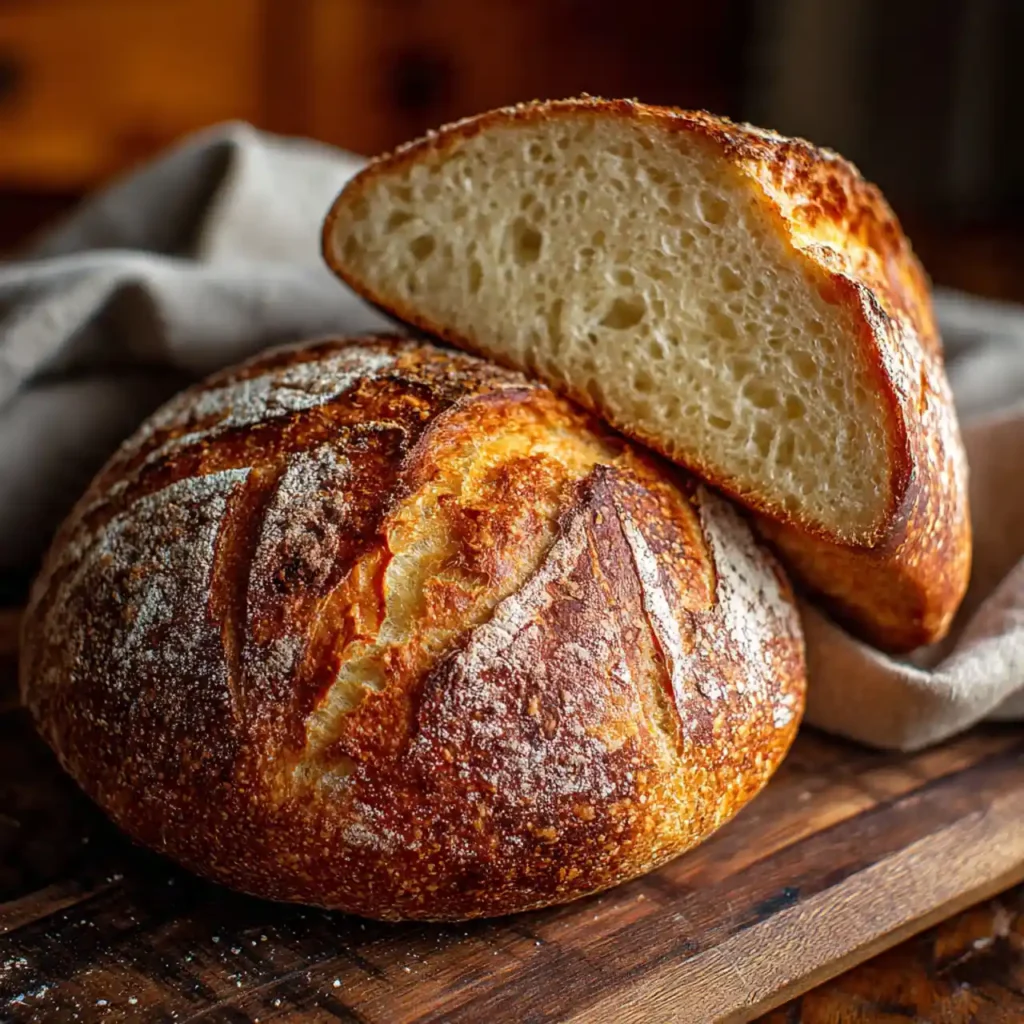
How to Make Crusty Golden Sourdough Bread
These steps keep the process simple and give structure to the dough.
1. Mix the Dough
Stir the starter into warm water until cloudy. Add flour. Mix until no dry flour remains. Cover and rest 30 minutes. This rest helps the dough hydrate and stretch more easily.
2. Add Salt
Sprinkle salt over the dough. Pinch and fold it in. Once the salt disappears into the dough, cover again.
3. Bulk Fermentation
Let the dough rise until puffy. At warm room temperature, this takes 4–6 hours. At cooler temperature, it can take 6–8 hours. You’re looking for a 50–70% rise, not a full double.
Stretch and Folds
Do 3 sets of stretch-and-folds during the first 90 minutes:
- Set 1: 30 minutes after adding salt
- Set 2: 30 minutes later
- Set 3: 30 minutes later
Lift one side, stretch up, fold over the center, then rotate the bowl and repeat. These gentle pulls help build strength.
4. Pre-Shape
Turn the dough onto a lightly floured surface. Pull the edges toward the center to make a loose ball. Flip seam-side down. Rest 15–20 minutes.
5. Final Shape
Flip seam-side up. Pull each edge toward the center again. Flip seam-side down. Use your hands to pull the dough toward you while rotating. This creates surface tension. A tight surface gives a better rise and a more open crumb.
6. Proof
Place the dough seam-side up in a floured basket.
You have two options:
Overnight Cold Proof
Refrigerate 12–18 hours. This makes the crust darker and the flavor deeper.
Same Day Proof
Leave at room temperature 1–2 hours until slightly puffy.
Baking Methods
You can bake this loaf in a Dutch oven or on a baking steel. Both methods use steam to let the bread expand before the crust sets.
Method 1: Dutch Oven
Heat the Dutch oven at 475°F for 45 minutes.
Flip the dough onto parchment. Score the top with a sharp blade. Carefully lower the dough into the pot.
Bake:
- 30 minutes covered
- 12–18 minutes uncovered
Cool at least one hour.
Method 2: Baking Steel or Stone
Heat the steel at 500°F for 45–60 minutes.
Place an empty metal pan on the bottom rack.
Flip dough onto parchment. Score the top. Slide the dough onto the steel. Pour 1 cup hot water into the bottom pan.
Bake:
- 20 minutes with steam at 500°F
- Remove steam pan
- Reduce to 450°F
- Bake 15–20 minutes more
Let cool one hour.
Why This Recipe Works
This method uses timing and tension, not force. Each step has a purpose.
- The autolyse helps the dough stretch without kneading.
- The stretch-and-folds strengthen the dough gradually.
- The long cold proof slows fermentation for better crust and flavor.
- Baking in a covered pot keeps steam inside, giving strong oven spring.
- Scoring guides the dough so it expands upward, not sideways.
These small details add up to a crusty, well-shaped loaf.
Tips for Success
- Use an active starter. It should double within 4–6 hours after feeding.
- Keep the dough warm during bulk fermentation. A cooler room slows the rise and makes the loaf tight.
- Don’t rush shaping. A tight surface gives structure.
- Let the bread cool fully. Cutting too early makes the crumb gummy.
Recipe FAQ,s
Why is my sourdough flat?
Flat bread often comes from under fermentation or weak shaping. Let the dough rise until puffy and stretchy. Build more surface tension during shaping.
How do I know bulk fermentation is done?
Look for a 50–70% rise, a smoother top, and small bubbles on the sides. The dough should feel light when lifted.
Can I use all purpose flour?
Yes, but the dough will feel softer and spread more. Bread flour gives better height because it has more protein.
Why is my sourdough gummy?
The loaf was either under-baked or sliced too soon. Bake until deep golden. Cool at least one hour.
Can I skip the overnight proof?
Yes, but the flavor won’t be as deep. A cold proof also makes scoring easier.
How do I store sourdough bread?
Keep the loaf at room temperature in a paper bag or wrapped in a clean towel. Avoid plastic unless you want a softer crust.
Conclusion
This crusty golden sourdough bread looks rustic but follows a clear method. You don’t need special gear. You only need patience, attention to texture, and steady heat. Follow each step, watch the dough more than the clock, and let the loaf finish baking fully.
Sourdough Bread
Ingredients
- 100 g active sourdough starter about 1/2 cup
- 375 g warm water about 1 1/2 cups + 1 tbsp
- 500 g bread flour about 4 cups
- 10 g salt about 1 1/2 tsp
Optional:
- Replace 50–100 g flour with whole wheat.
- Use rice flour to dust your proofing basket.
Instructions
1. Mix the Dough
- Stir the starter into warm water until cloudy. Add flour. Mix until no dry flour remains. Cover and rest 30 minutes. This rest helps the dough hydrate and stretch more easily.
2. Add Salt
- Sprinkle salt over the dough. Pinch and fold it in. Once the salt disappears into the dough, cover again.
3. Bulk Fermentation
- Let the dough rise until puffy. At warm room temperature, this takes 4–6 hours. At cooler temperature, it can take 6–8 hours. You’re looking for a 50–70% rise, not a full double.
Stretch and Folds
- Do 3 sets of stretch-and-folds during the first 90 minutes:
- Set 1: 30 minutes after adding salt
- Set 2: 30 minutes later
- Set 3: 30 minutes later
- Lift one side, stretch up, fold over the center, then rotate the bowl and repeat. These gentle pulls help build strength.
4. Pre-Shape
- Turn the dough onto a lightly floured surface. Pull the edges toward the center to make a loose ball. Flip seam-side down. Rest 15–20 minutes.
5. Final Shape
- Flip seam side up. Pull each edge toward the center again. Flip seam-side down. Use your hands to pull the dough toward you while rotating. This creates surface tension. A tight surface gives a better rise and a more open crumb.
6. Proof
- Place the dough seam side up in a floured basket.
- You have two options:
Overnight Cold Proof
- Refrigerate 12–18 hours. This makes the crust darker and the flavor deeper.
Same Day Proof
- Leave at room temperature 1–2 hours until slightly puffy.
Baking Methods
- You can bake this loaf in a Dutch oven or on a baking steel. Both methods use steam to let the bread expand before the crust sets.
Method 1: Dutch Oven
- Heat the Dutch oven at 475°F for 45 minutes.
- Flip the dough onto parchment. Score the top with a sharp blade. Carefully lower the dough into the pot.
- Bake:
- 30 minutes covered
- 12–18 minutes uncovered
- Cool at least one hour.
Method 2: Baking Steel or Stone
- Heat the steel at 500°F for 45–60 minutes.
- Place an empty metal pan on the bottom rack.
- Flip dough onto parchment. Score the top. Slide the dough onto the steel. Pour 1 cup hot water into the bottom pan.
- Bake:
- 20 minutes with steam at 500°F
- Remove steam pan
- Reduce to 450°F
- Bake 15–20 minutes more
- Let cool one hour.
Video
Notes
📝 Notes
- Use an active, bubbly starter for best rise and flavor.
- Weigh ingredients for consistent results—use a kitchen scale.
- Perform stretch-and-folds during bulk fermentation to build strength.
- Cold retard in the fridge overnight to develop deeper flavor.
- Score the loaf just before baking to control oven spring.
- Bake in a preheated Dutch oven for a crisp, golden crust.
- Cool completely on a rack before slicing to set the crumb.
- Store at room temperature in a paper bag or cloth to retain crustiness.
🍽️ Nutrition Facts (Per Serving)
Calories: 220 kcal;Carbohydrates: 43 g;
Fiber: 2 g;
Sugars: 1 g;
Protein: 7 g;
Fat: 1.5 g;
Saturated Fat: 0.2 g;
Cholesterol: 0 mg;
Sodium: 220 mg;
Potassium: 80 mg;
Calcium: 20 mg;
Iron: 2 mg.